In this guide
The short version
- An e-rig heats a chamber to a set temperature on a battery; no torch, no guessing when the nail is ready.
- Four heating designs: Puffco 3D chambers, Dr. Dabber induction and quartz inserts, ceramic atomizers, disposable ceramic nails.
- Battery life is quoted in heat cycles per charge: about 40 on the Peak Pro 3DXL, up to 30 on the Switch 2, around 15 on the New Proxy.
- Desk: Peak Pro 3DXL or Switch 2. Bag: New Proxy, Switch Go or Dabtron 2.0. Pocket: Pivot or Ghost 2.
An electric dab rig, or e-rig, does the one job a torch rig makes you do by feel: it heats a chamber to a set temperature and tells you when it is ready. No butane, no glowing nail, no counting seconds while it cools. This guide covers how the heating systems differ, what the settings and apps change, why battery life is quoted in heat cycles, and which kind of rig fits a desk, a bag or a pocket.
What an e-rig replaces
A traditional rig is glass with a quartz or titanium nail. You heat the nail with a torch, wait for it to cool into a usable range, place the concentrate, cap it and draw. Most of the skill is in the waiting: too hot and the flavor goes harsh, too cool and the material puddles. The torch needs clean fuel too (see our butane guide).
An e-rig puts a battery and a heating element under the chamber. You pick a setting, press a button, and it heats on its own, in about 20 to 30 seconds on the current Puffco models. The glass on top still cools the vapor, and most e-rigs still use a carb cap.
How the chamber heats
Four heating designs cover the rigs in this guide.
3D chambers
Puffco's 3D Chamber heats from the bottom and the side walls at once rather than from a single plate underneath. The New Proxy's version is taller than the original, which the brand says cuts down on splash. The Peak Pro 3DXL and the pen-sized Pivot use the same family of chamber; the Pivot's is a quick-release version made to be pulled out and swapped.
Induction inserts
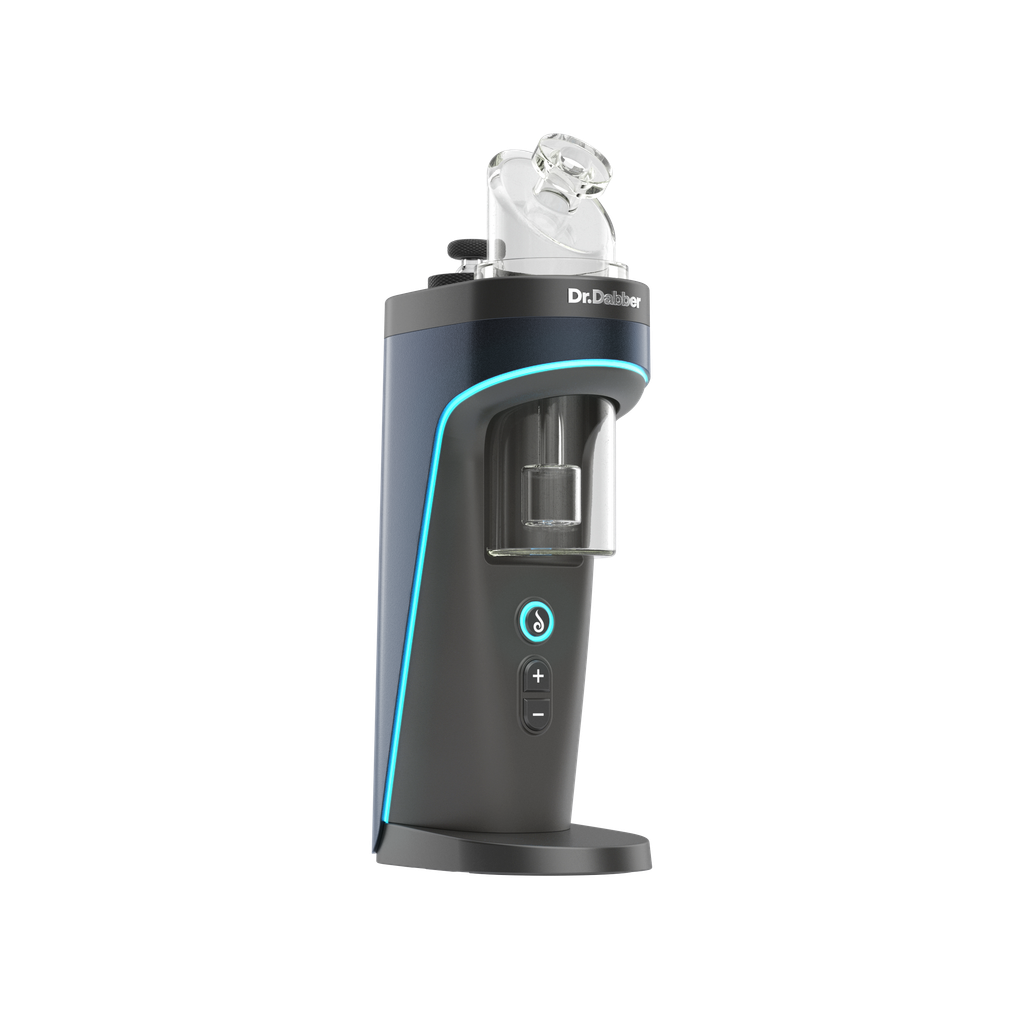
The Dr. Dabber Switch 2 never touches the concentrate with a heating element. It uses omni-directional induction heating to warm a removable quartz or sapphire insert and reads the temperature in real time with a built-in infrared sensor. Because the insert is a separate cup, you can lift it out to clean it or change materials. The portable Switch Go uses a 14mm pure quartz insert with the same omni-directional heating, which the brand says leaves fewer cold spots.
Ceramic atomizers
Lower-cost rigs use a ceramic atomizer: a replaceable heating cup that sits in the base. The Pulsar Dabtron 2.0 and the Ooze Electro Barrel both work this way; the Electro Barrel's C-Core Onyx atomizer has an Azul ceramic core with no exposed metal heating element. Atomizers wear out, so check that a replacement exists; Pulsar sells the Dabtron 2.0 atomizer on its own.
Disposable ceramic nails
The AUXO Cenote uses a disposable ceramic nail that is thrown away when spent instead of cleaned; five come in the box. It is the lowest-maintenance approach, at the cost of buying consumables.
Heat settings, modes and apps
What varies between rigs is how much control you get beyond a few presets.
- Fixed presets. The Pulsar Dabtron 2.0 gives you 400°F, 450°F, 500°F and 550°F, with a digital display for the setting and battery level and haptic feedback. The Ooze Electro Barrel uses three voltage levels instead (3.1V green, 3.4V blue, 3.8V red).
- Presets plus an app. The Puffco Peak Pro 3DXL ships with four heat profiles you can fine-tune in the Puffco Connect app, along with the lighting. The New Proxy's app also sets session time and vapor levels. The AUXO Cenote has three presets and a Pro Mode that opens a 392°F to 664°F range in the AUXO Connect app.
- Heating curves. Dr. Dabber's Switch 2 and Ghost 2 offer three modes rather than three temperatures. Ascent raises the temperature gradually through the session, the way a torch-heated nail is used; Descent simulates a nail cooling down; Steady holds one temperature no matter how hard you draw or how much you loaded. The Switch Go adds custom curves you build in the app.
Lower settings generally favor flavor, higher settings vapor density. Start in the middle and move one step at a time.
Let the device finish its heat cycle before you draw, even when the chamber looks ready. Wait for the ready signal (a vibration, a light or an app notice, depending on the model); drawing early is the most common reason a first session disappoints.
Battery life is counted in heat cycles
Because a session is a fixed heating event, makers quote battery life as cycles (or dabs) per charge rather than hours.
Device | Heat-up | Per charge | Charging |
|---|---|---|---|
Puffco Peak Pro 3DXL | About 20 seconds | About 40 heat cycles | USB-C or Qi wireless, about 2 hours |
Dr. Dabber Switch 2 | Not stated | Up to 30 heating cycles | 36W fast charger in the box |
Dr. Dabber Switch Go | Not stated | Up to 25 heating cycles | USB-C, pass-through |
Dr. Dabber Ghost 2 | Not stated | About 20 cycles (1,000mAh) | USB-C |
Puffco New Proxy | About 30 seconds | Around 15 dabs | USB-C, 1.5 to 2 hours |
Puffco Pivot | Not stated | Up to 15 dabs | USB-C |
The Cenote quotes up to 12 sessions from 2000mAh; the Dabtron 2.0 (1500mAh) and Electro Barrel (2000mAh) list capacity but no cycle count. A bigger battery is not automatically more sessions: the Cenote's 2000mAh gives twelve while the Peak Pro quotes forty, because chamber size, heating method and temperature all draw on it differently.
Pass-through charging, which the Switch Go and the Electro Barrel both list, means the device works while plugged in. For a desk rig that matters more than the cycle count.
Desktop smart rigs
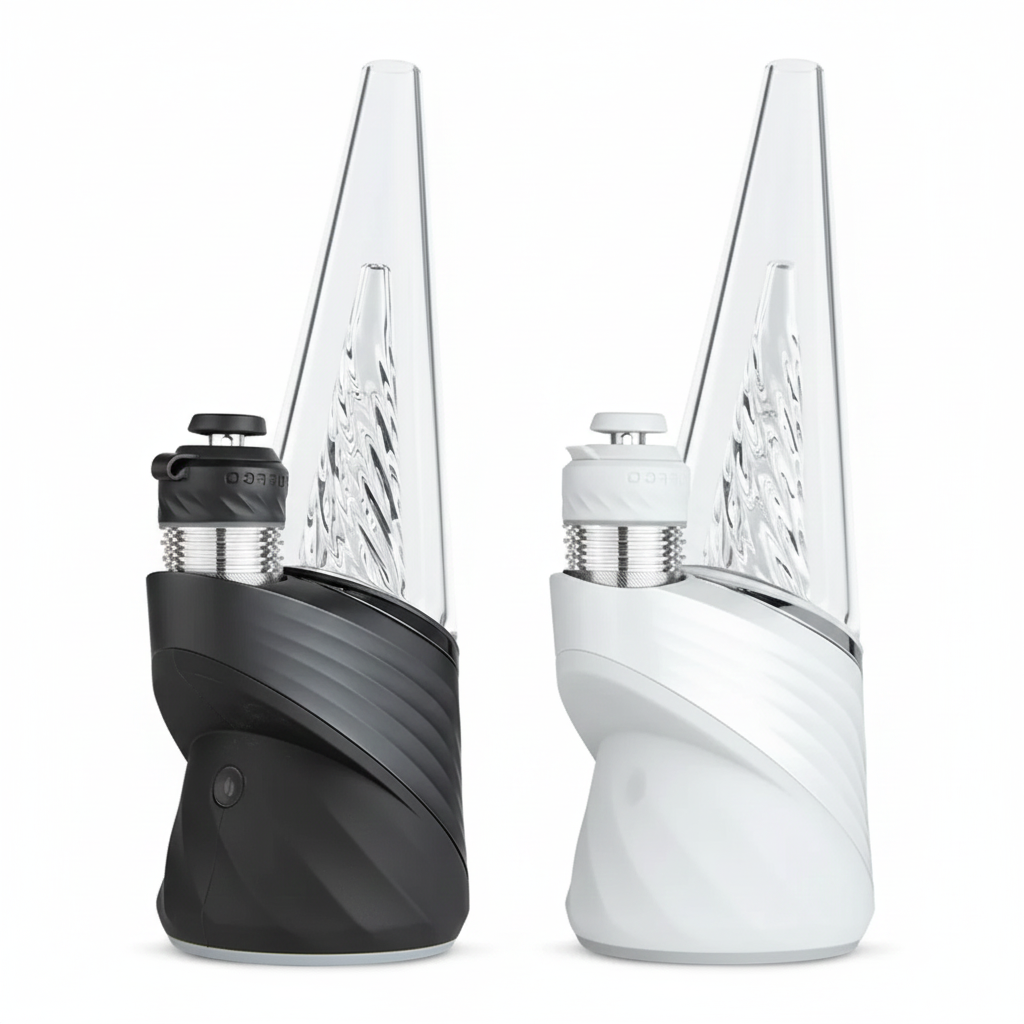
The Puffco Peak Pro 3DXL comes in Onyx, Pearl and Plasma, runs on a single button plus the app, and ships with a joystick cap, a loading tool, five dual tools, a USB-C cable and a carrying case. Wireless Qi charging and the forty-cycle battery are why it suits a coffee table.
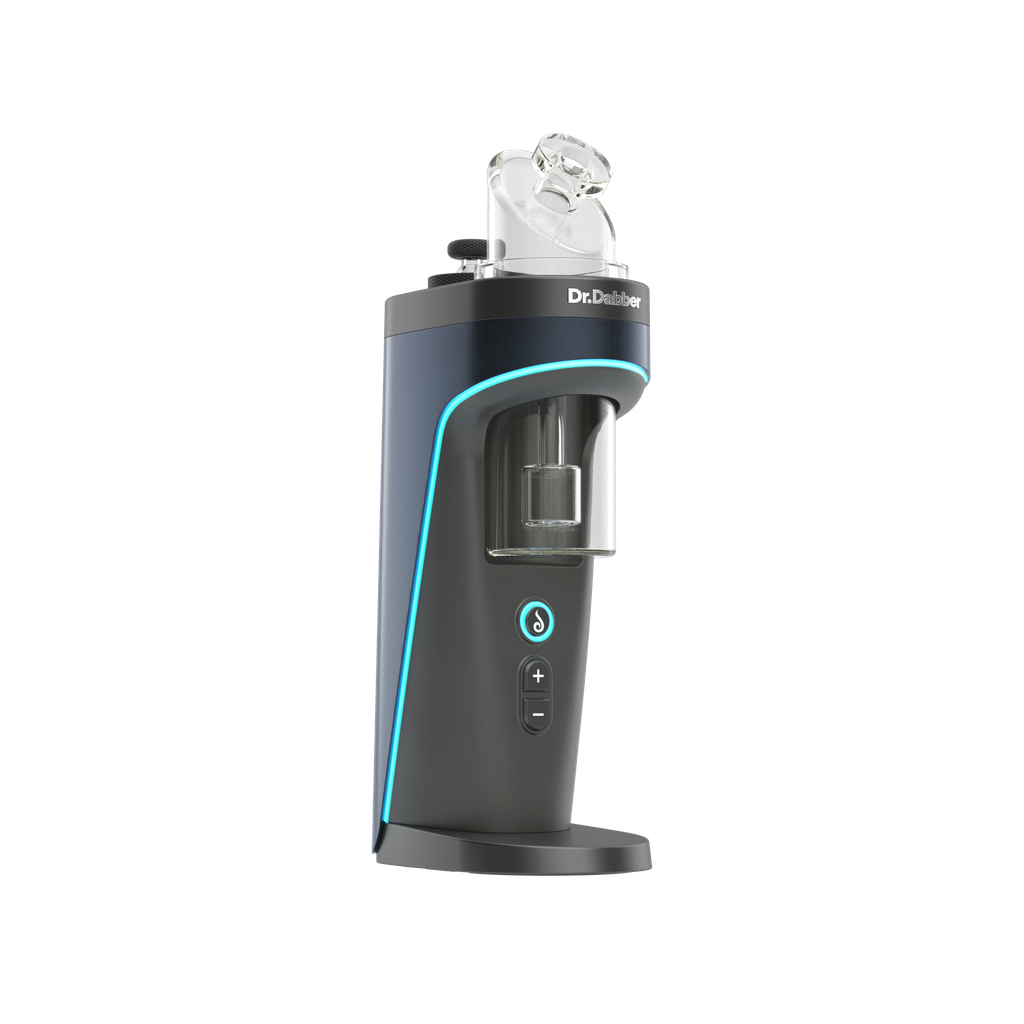
The Dr. Dabber Switch 2 is the choice if the three heating curves and the infrared sensor appeal to you, or if you want the insert to be a separate piece you can swap between quartz and sapphire. The box holds the device, a quartz insert, a 360° glass directional carb cap, the glass attachment, a DROP loading tool, the 36W charger and a 1m cable.
Both brands sell the consumable parts separately: the Puffco collection has chambers, glass and caps, and the Dr. Dabber collection has inserts for the Switch 2 and Switch Go.
Portable rigs and pens
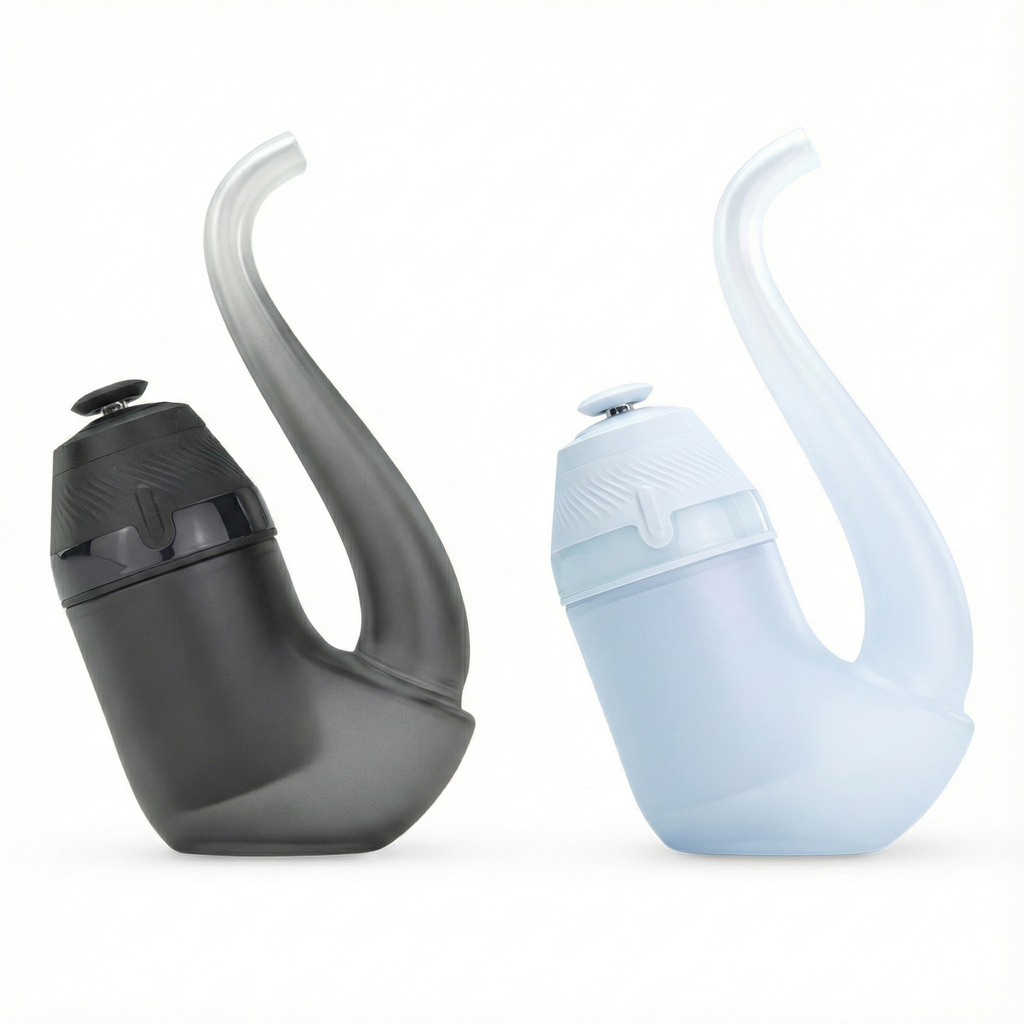
The Puffco New Proxy is the modular handheld. The base holds the chamber and battery, the included hand-blown borosilicate glass pipe slides onto it, and it fits the existing Proxy bubblers and pipes, so one base can be a dry pipe one day and a water piece the next. It heats in about 30 seconds and carries a two-year warranty.
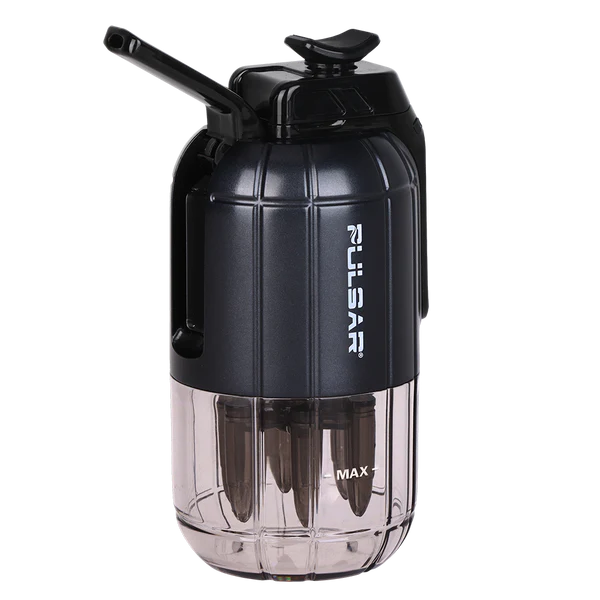
The Pulsar Dabtron 2.0 is the budget all-in-one: a ceramic atomizer under a magnetic lid, an integrated carb cap, four temperatures on a digital display, and a bubbler with a six-arm percolator and a zirconia flip-up mouthpiece built into the unit.
The Dr. Dabber Switch Go brings the Switch family's quartz insert, omni-directional heating and app curves down to a portable size with up to 25 cycles per charge, and the Ooze Electro Barrel is the simplest of the group: three voltage levels, a 2000mAh battery and a replaceable ceramic atomizer.
For a pocket, the Puffco Pivot and the Dr. Dabber Ghost 2 are pens rather than rigs, both on USB-C: four presets, a light-bar timer and haptic feedback on the Pivot; Ascent, Descent and Steady modes, 360° radial sidewall heating and a ceramic vapor path on the Ghost 2.
Which one to pick
A rig that stays on a desk wants the Peak Pro or the Switch 2, for the big batteries, the included tools and the glass that comes with them. A rig that travels wants the Proxy if you own or want Proxy glass, the Switch Go if you want the insert system, and the Dabtron 2.0 if you want everything in one piece for the least money. A pen is for people who value size over water filtration.
Whatever you choose, budget for a loading tool, swabs and a spare chamber, insert or atomizer; the dab tools collection has them, and every device is in the concentrate vaporizers collection. Clean the chamber while it is still slightly warm rather than after it has set, and the heat cycles stay consistent.
Questions people ask
What is the difference between a dab rig and an e-rig?
A dab rig is glass with a nail you heat with a butane torch. An e-rig has a battery and a heating element under the chamber, so it heats to a set temperature on its own and signals when it is ready.
How many sessions does an e-rig battery last?
Makers quote cycles per charge rather than hours. The product data lists about 40 heat cycles for the Puffco Peak Pro 3DXL, up to 30 for the Dr. Dabber Switch 2, up to 25 for the Switch Go, about 20 for the Ghost 2 and around 15 for the New Proxy and the Pivot.
Do I still need a carb cap with an electric rig?
Most e-rigs ship with one and use it the same way a torch rig does. The Peak Pro 3DXL includes a joystick cap, the Switch 2 a 360 degree glass directional carb cap, and the Dabtron 2.0 has one built in.
What do Ascent, Descent and Steady mean on a Dr. Dabber?
They are heating curves rather than fixed temperatures. Ascent raises the temperature gradually through the session, Descent simulates a nail cooling down, and Steady holds one temperature regardless of how hard you draw or how much you loaded.
Which parts wear out on an e-rig?
The chamber, insert or atomizer is the consumable. Puffco sells replacement 3DXL and Proxy chambers, Dr. Dabber sells quartz, sapphire and titanium inserts, Pulsar sells the Dabtron 2.0 atomizer, and the AUXO Cenote uses disposable ceramic nails.