In this guide
The short version
- The Captive Cap holds two snap discs that click at around 240°C; the first click means stop heating and draw, the second means it has cooled and can be heated again.
- Heat the side of the cap, not the end, and keep the device turning; a torch gets there in a few seconds, and heating past the click risks combustion and damages the cap.
- Expect 2 to 4 heat cycles from a full bowl and 1 to 2 from a half bowl; medium brown herb and thin vapor mean it is spent.
- Soak the metal parts in isopropyl or hot soapy water, but never the cap or any wood, and pull the O-rings first.
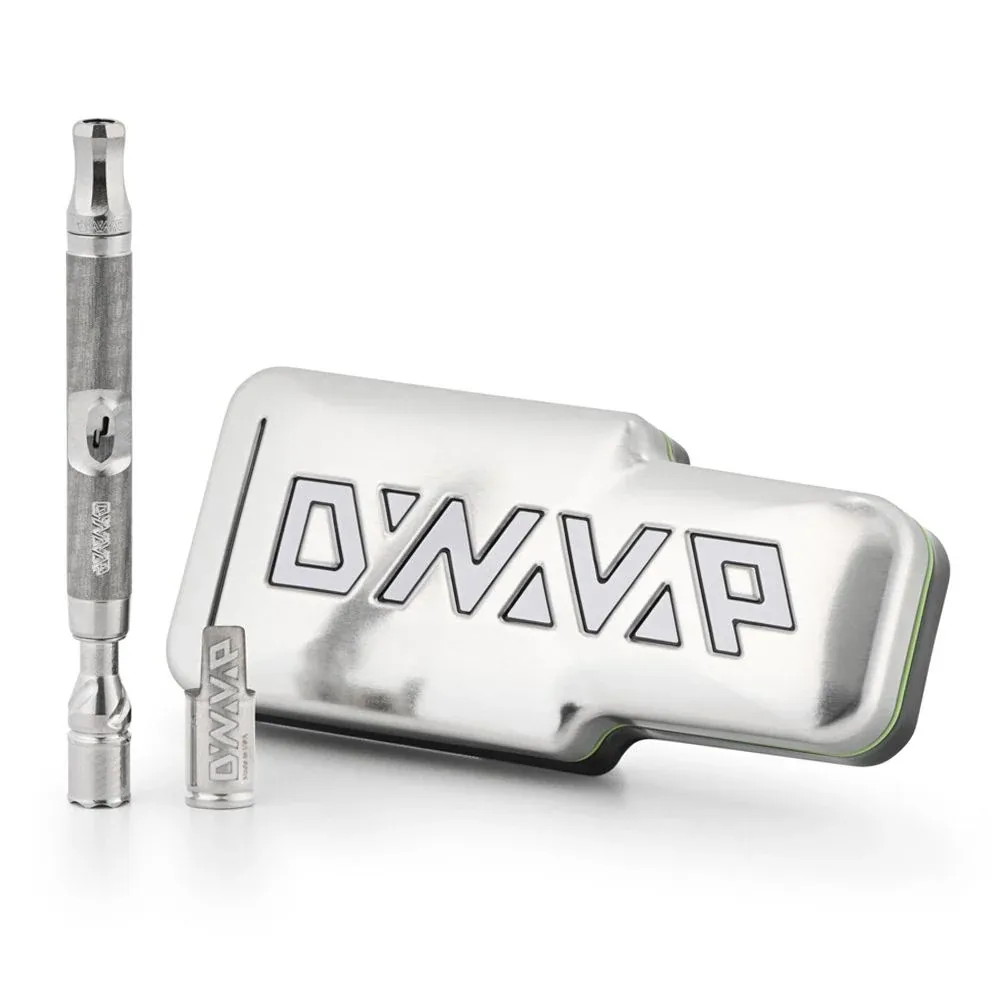
A DynaVap has no battery, no heating element and nothing to charge. It is a metal or glass tip that holds the herb, a stem you draw through, and a stainless steel cap that clicks when the tip reaches vaporizing temperature. You bring the heat yourself, usually with a butane torch, and the click tells you when to stop. This guide covers how the cap works, how to heat one, how to read a bowl and how to clean it, with the facts taken from DynaVap's own instructions and the listings in our DynaVap collection.
What is inside the cap
The Captive Cap is a small stainless steel cup that sits over the tip. Inside its crimped end are two thin discs. As the cap heats, the discs reach a set temperature range and snap together with an audible click; as it cools, they snap back with a second click. DynaVap rates the standard and Captive caps at about 240°C, give or take 10 degrees, which is roughly 465°F. A Low Temp version clicks at about 215°C.
That is all the temperature control there is. The discs do the job a thermostat does on a battery device: they tell you the tip is in the vaporizing range and when it has dropped out of it. The cap also carries a built-in digger tool for clearing the chamber.
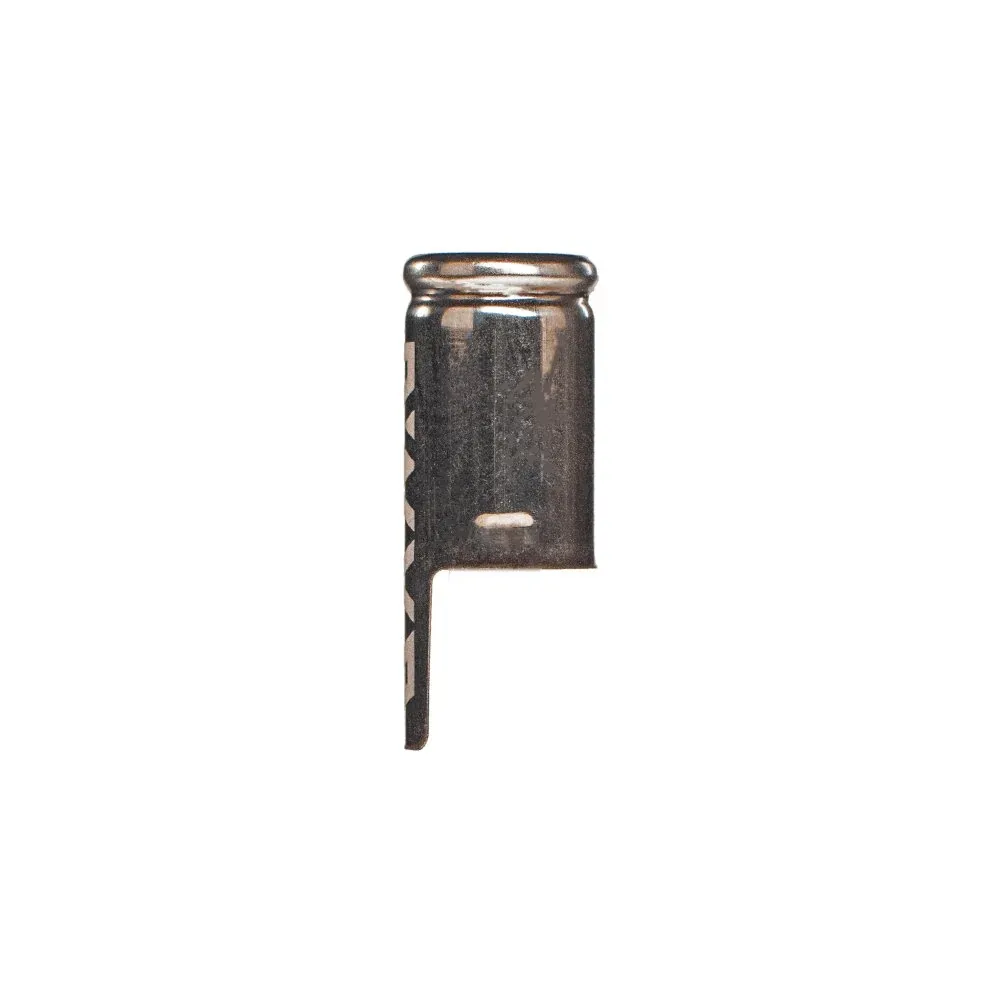
The cap fits every DynaVap tip except the Hyper Tip, so it is the same part on a stainless M7, a titanium VonG X or the glass G3.
Loading the tip
Take the cap off, fill the tip, put the cap back. DynaVap suggests a medium grind and a gentle tamp: fill the chamber, press lightly, and back off if the draw feels plugged. Keep the material reasonably dry, because sticky herb extracts unevenly, and do not pack it like a pipe bowl.
Chamber sizes are small. The M7 and M7 XL hold about 0.1g, the B2 about 0.075g and the G3 about 0.05g. Most tips have an Adjust-a-Bowl feature: the screen inside the tip, which DynaVap calls the CCD, sits in one of two positions, and the lower one halves the chamber for a shorter session. The B2 is the exception, built as a half bowl from the start.
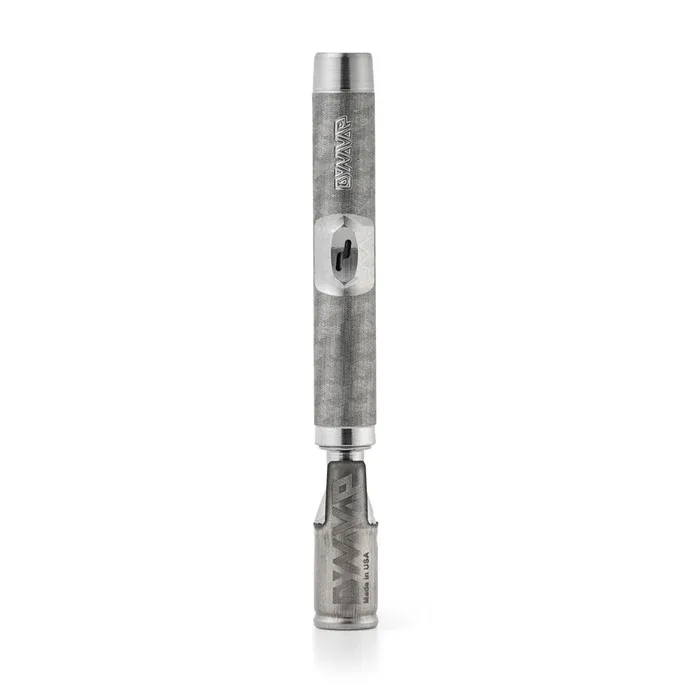
Heating with a torch: where, how long, and when to stop
This is the part new owners get wrong. DynaVap's instructions come down to four habits.
- Heat the side of the cap, not the end. Aim at the barrel of the cap, around the logo. Heating the closed end makes the discs click early, before the herb is up to temperature, and you get thin vapor.
- Keep the device turning. Roll it between your fingers the whole time so the heat spreads around the cap instead of scorching one side.
- Use a medium, steady flame. The hottest part of a torch flame is just past the inner blue cone, so hold the cap a short distance from the nozzle. A single-flame torch is more precise; a multi-flame torch heats faster. Our torch lighter guide covers the difference, and the butane guide covers filling the empty DynaTorch that ships with the M7, M7 XL and B2.
- Stop at the click. The moment you hear it, pull the flame away and draw. The click is the finish line, not a starting gun.
DynaVap's pages quote anywhere from 3 to 8 seconds with a torch, depending on the flame and the tip: titanium heats faster than stainless, and a soft-flame lighter takes about 15 seconds. If 6 seconds or so pass with no click, stop, let the cap cool, and try again rather than pushing on.
Never keep heating after the click. That is how a bowl combusts instead of vaporizing, and DynaVap says overheating permanently damages the cap.
Where you point the flame also shapes the draw. Heat nearer the tip end of the cap for a quicker warm-up and a lighter, flavor-forward cycle; heat nearer the base for a slower warm-up and denser extraction. That is the DynaVap version of a temperature dial.
The heat cycle, and how many you get
One heat cycle is: heat to the click, draw, then let the device cool until the second click before heating again. Draw slowly and steadily; DynaVap's phrase is sip, not rip. The cap stays in the vaporizing range for about 30 seconds after the heat-up click, and the cool-down click tells you it has dropped below it. Reheating before that second click stacks heat on heat and pushes the bowl toward scorching.
A full bowl gives 2 to 4 cycles, with 3 a good target, and each cycle gives 1 to 3 draws. A half bowl on the Adjust-a-Bowl setting gives 1 to 2 cycles.
The bowl tells you when it is done. Herb that finishes in 2 to 4 cycles comes out dark golden to medium brown. Light green or tan means there is more to extract. Very dark brown to black means too much heat: cycles stacked too close, or heating pushed past the click. The clearest reload signal is the vapor: when it turns thin and bland, the bowl is spent. A quick stir after the second cycle evens out extraction, and a tight draw is fixed by loosening the pack, not by adding cycles.
Heat in a quiet room for the first few sessions. The click is easy to miss over a TV, and you can feel it through your fingers once you know what to expect.
Which DynaVap to start with
Every current device works the same way; the differences are material, airflow and size. The G3 is the simplest: a glass tip and stem in one piece with a built-in screen, a 0.05g chamber, a circular airport for airflow and the Captive Cap, shipped in a tin with a torch lighter.
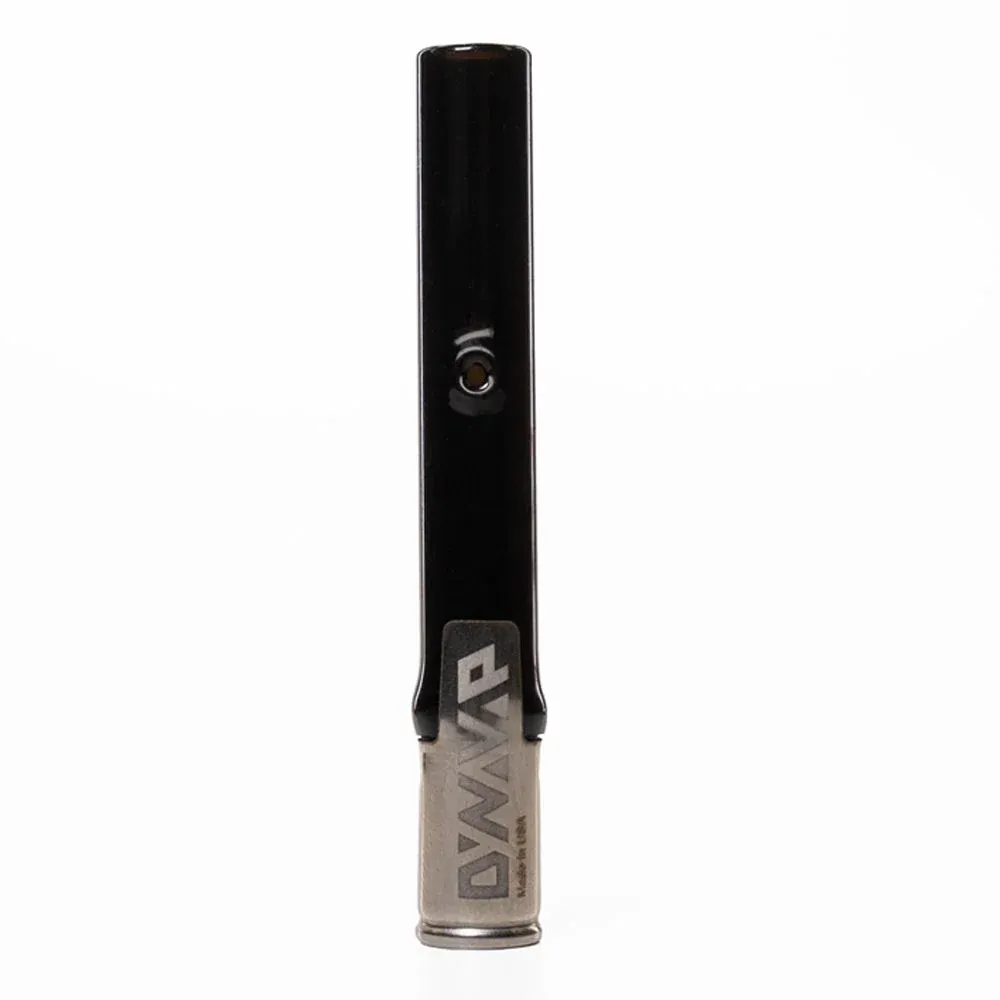
The M7 is the all-stainless reference model: a finless tip that holds heat and keeps the stem cooler, adjustable airflow, a 0.1g Adjust-a-Bowl chamber, a 10mm mouthpiece for water pieces, and compatibility with torches and induction heaters. The M7 XL adds length so the vapor has more room to cool, and six airflow settings. The B2 pairs a stainless tip with a silicone stem, and the VonG X puts a stainless tip and condenser in a titanium body with a twist-to-adjust mouthpiece and both 10mm and 14mm connections. The OMini is the compact titanium model with a Regenerator that preheats incoming air with heat recovered from the outgoing vapor; its listing names only DynaVap induction heaters as the heat source, so it is not the one to pair with a torch. All six are covered in our DynaVap new arrivals post, and our heating styles guide explains the conduction and convection designs a heated metal tip sits between.
Cleaning and spares
With no electronics, cleaning is simple. Pull the O-rings first, since isopropyl dries them out, then soak the metal parts in isopropyl alcohol or hot soapy water for a few hours, rinse with hot water, and run a cotton swab or a hard-bristled pipe cleaner through the condenser. Clean often and it stays easy; a clean device tastes better.
Two things never get soaked: the cap and any wood part. Wipe the cap with a cotton swab and soapy water. If it does get wet inside, let it dry for at least 24 hours before heating it, because moisture trapped in the crimped end can ruin the discs. If you combust a bowl, let everything cool and give the device a full isopropyl clean.
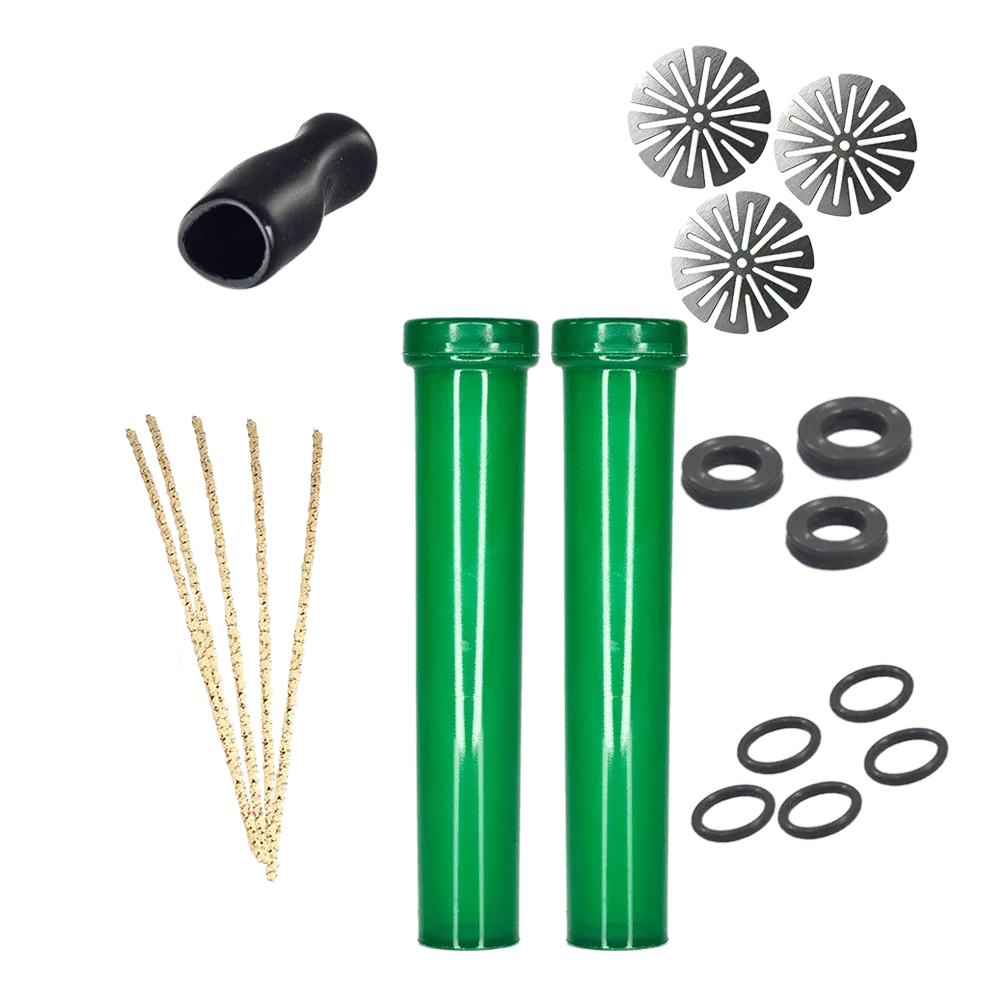
The DynaKit Basic covers the parts that wear or wander: three CCD screens, condenser and high-temperature O-rings, five pipe cleaners, two storage tubes and the Fat Mouthpiece adapter for 14mm water pieces. The DynaCoil is a single-piece titanium insert that replaces the CCD screen and turns most tips into a concentrate device (full-melt concentrates recommended; not for the G3 or the Hyper Tip). The DynaStash Wenge, a pocket wooden case for 92mm devices, carries a magnet that doubles as a cooling rest and a way to lift a hot cap without touching it. The cap and tip are hot after every cycle, so give them a moment before decapping, and set the device down on something that will not mind the heat.
Questions people ask
Do I need an induction heater, or will a torch do?
A butane torch is what DynaVap recommends for most of its devices, and the M7, M7 XL and B2 ship with an empty single-flame DynaTorch. The OMini is the exception: its spec sheet lists only DynaVap induction heaters as the heat source.
What happens if I keep heating after the click?
The herb can combust instead of vaporizing, and DynaVap says overheating permanently damages the cap. Pull the flame away the moment you hear the click. If you combust a bowl once, let everything cool and clean the device with isopropyl before the next session.
How many draws do I get from one bowl?
DynaVap puts a full bowl at 2 to 4 heat cycles and 1 to 3 draws per cycle, so anywhere from a couple of hits to about ten. A half bowl set with the Adjust-a-Bowl feature gives 1 to 2 cycles.
Can I use a DynaVap with a water pipe?
Yes. The M7, M7 XL and B2 fit 10mm joints directly, the VonG X has both 10mm and 14mm tapered connections, and the Fat Mouthpiece adapter in the DynaKit Basic fits compatible devices to 14mm pieces.
Why does the cap click more than once?
The two discs inside the cap can click once or twice on the way up and again on the way down; DynaVap says this is normal. Treat the heat-up click, or the quick double click, as the signal to stop heating, and the later cool-down click as the signal that it is ready for another cycle.