In this guide
- Conduction: the oven heats the herb by contact
- Convection: hot air does the work
- Hybrid: a warm chamber plus hot air
- What the heating type changes
- Three hybrids and where they sit
- Storz & Bickel Venty: built for speed
- Arizer Go SRT: convection-dominant with a glass path
- PAX Four: hybrid in a pocket
- How to choose
The short version
- Conduction heats the herb by contact with a hot oven; convection heats the air that passes through it.
- Conduction is quick and draws easy but needs a mid-session stir; convection stays even and pauses with you but works the battery harder.
- Most modern portables are hybrids: the Go SRT is 75% convection, and the Venty and PAX Four pair a heated chamber with hot air.
- Pick by how you use it: one quick session, conduction; slow and even, convection; both, a hybrid.
Every dry herb vaporizer has to get heat into the herb without burning it, and there are only two ways to do that: touch it with something hot (conduction) or push hot air through it (convection). Most portables now do some of both. Which way a device leans decides how fast it is ready, how the first draw tastes against the last, how often you stir, and how hard the battery works. Here is what each approach does, and the devices on our shelves that show it.
Conduction: the oven heats the herb by contact
A conduction vaporizer is an oven. The chamber walls heat up, and the herb touching them heats with them. The heat then has to work its way from the walls to the middle of the load, which is why conduction ovens like a fine grind and a fairly full pack: more contact with the wall means more even heat.
That design gives you three things. Heat-up is quick, because a small oven does not need much air moving to get going. The draw is open, closer to a cigarette than a straw, since the air does not have to pass through a heater on the way in. And the oven keeps cooking between draws, so a session feels steady from start to finish.
It also costs you something: stirring. Halfway through a session, open the oven and turn the load so the center meets the wall. Skip that and the last draws taste roasted while the middle is still underdone. Conduction also does not pause. Once the oven is at temperature the herb is being heated whether you are drawing or not, so a conduction session is best finished rather than put down.
A fine, even grind and a snug pack matter more in a conduction oven than anywhere else. Loose, coarse herb in a conduction chamber heats unevenly and tastes like it.
Convection: hot air does the work
A convection vaporizer heats the air, not the chamber. When you draw, air passes over a heater and then through the herb, and that hot air carries the vapor out. Between draws far less is happening, because the herb is only heated while air is moving through it.
The upside is evenness. The whole load heats as air passes through it, so flavor holds from the first draw to the last and you stir rarely or not at all. Pauses do not cook the herb, so you can put a convection device down for a minute and come back to it. A coarser grind and a looser pack work fine, because air has to get through.
The downside is power and draw. Heating air on demand takes more energy than keeping a small oven warm, so pure convection portables tend to be larger, or give fewer sessions per charge. The draw is usually more restricted, since you are pulling through a heater and a bed of herb. And the first draw after heat-up can be thin until the air path has warmed through.
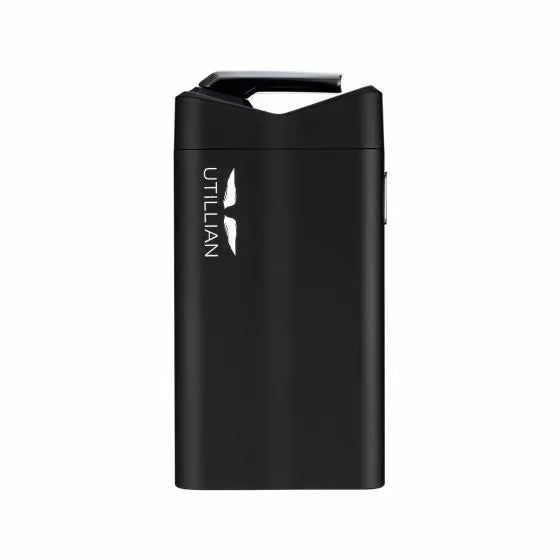
The Utillian 723 is the plainest convection example we stock: a convection heater, four settings at 356°F, 374°F, 392°F and 410°F, a press-and-hold boost that runs at 437°F, one-button control, and a 2,300mAh battery that Utillian rates at up to 60 minutes of continuous use, about 6 to 8 sessions a charge. It takes dry herb and wax.
Hybrid: a warm chamber plus hot air
Most of the serious portables sold today are hybrids. The chamber is heated, and air is also pushed through a heater on its way in. The balance differs by maker: Arizer rates the Go SRT at 75% convection and 25% conduction, Storz & Bickel describe the Venty's mini-heater as convection and conduction, and PAX calls the PAX Four's heater a high-output hybrid. The point of combining the two is to get a conduction oven's quick start and open draw together with convection's even extraction. The trade is a more complex device at a higher price.
Where a hybrid leans tells you how it behaves. A convection-heavy hybrid like the Go SRT acts like a convection device that is quicker to warm up. A conduction-heavy hybrid acts like an oven that needs less stirring. The spec sheet does not always say which, so the heat-up time and how much stirring the maker suggests are the clues.
Desktop units are a separate case. The Volcano Hybrid's hot air generator pushes heated air through the chamber and into a balloon or a tube, and it runs from a wall outlet, so battery is not a constraint. If a plug-in unit is an option for you, our portable vs desktop guide covers that choice.
What the heating type changes
What | Conduction | Convection | Hybrid |
|---|---|---|---|
Heat-up | Quick | Slower, or needs a bigger battery | Quick on most |
Flavor across a session | Best early, roasted late | Even | Even on most |
Stirring | Once, mid-session | Rarely | Sometimes |
Pausing mid-session | Keeps cooking | Pauses with you | Mostly pauses |
Grind and pack | Fine and snug | Coarser and looser | Medium |
Battery per session | Light | Heavy | Medium |
These are tendencies, not rules. A well-designed conduction oven can taste even with one stir, and a convection device with a big battery can outlast a small hybrid. Use the table to decide what to ask about, then check the device's own numbers.
Three hybrids and where they sit
Storz & Bickel Venty: built for speed
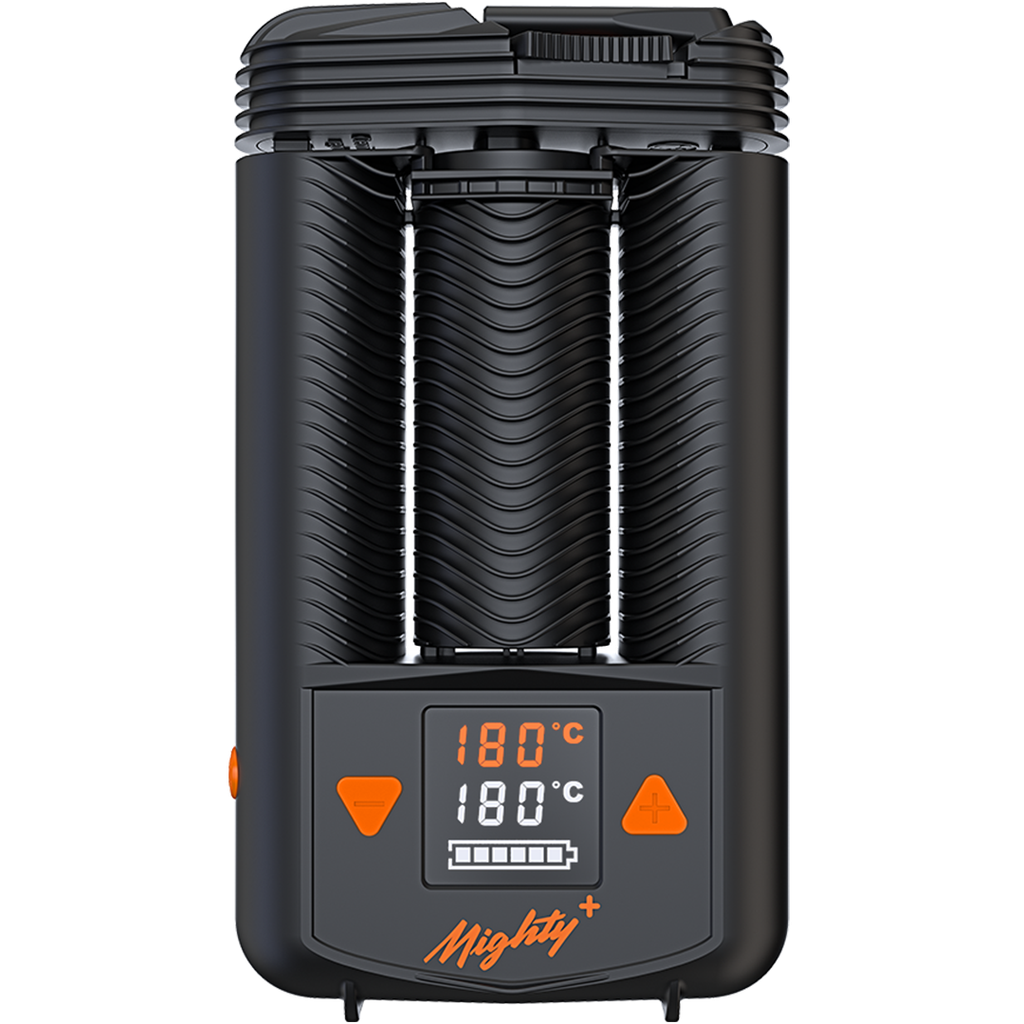
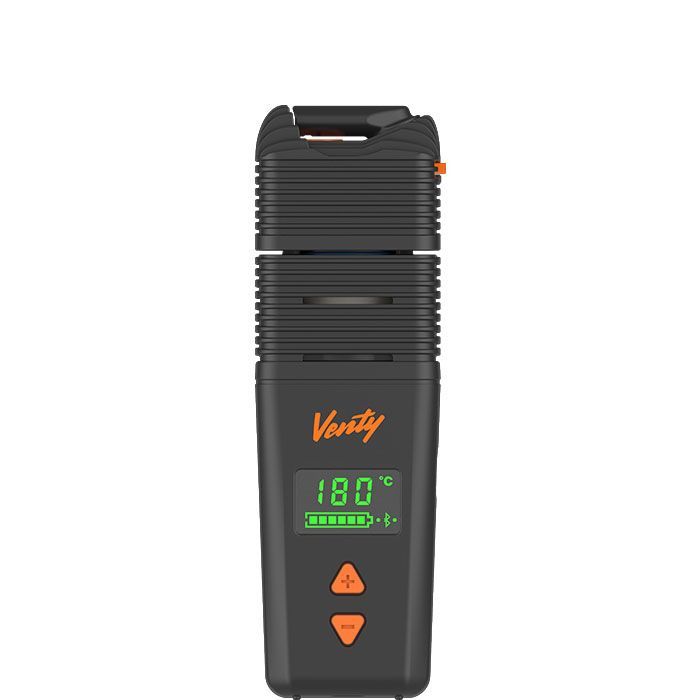
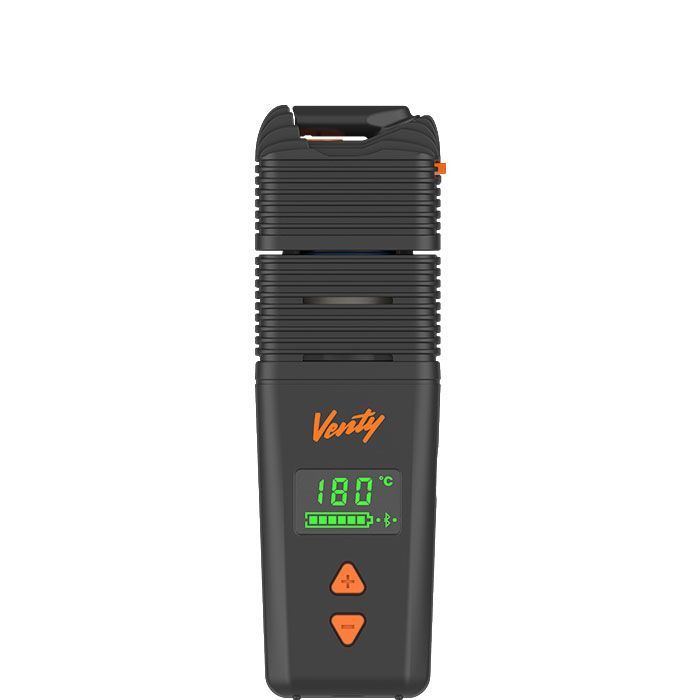
The Venty is the fast one. Storz & Bickel quote about 20 seconds to temperature, airflow you can open up to 20L per minute, a 104°F to 410°F range with Boost and Superboost on top, and a double-walled cooling unit. Two 18650 batteries drive a heater rated at 130W, and USB-C Supercharge brings it to 80% in about 40 minutes. There is Bluetooth control from a web app alongside the buttons on the device. The warranty is 2 years, extendable to 3 with registration.
Arizer Go SRT: convection-dominant with a glass path
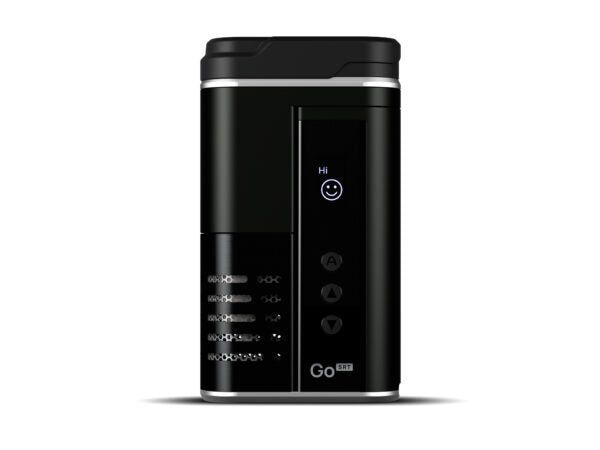
The Go SRT is the one to look at if flavor is the priority. Arizer rates the heating at 75% convection, and the vapor travels through an isolated borosilicate glass path rather than metal or plastic. Herb goes in Go Shell glass dosing capsules, which you can pre-load, and the box includes a 14mm water pipe adapter. Heat-up is 15 to 20 seconds, the range is 122°F to 428°F, and a 5000mAh 21700 cell charges over USB-C.
PAX Four: hybrid in a pocket
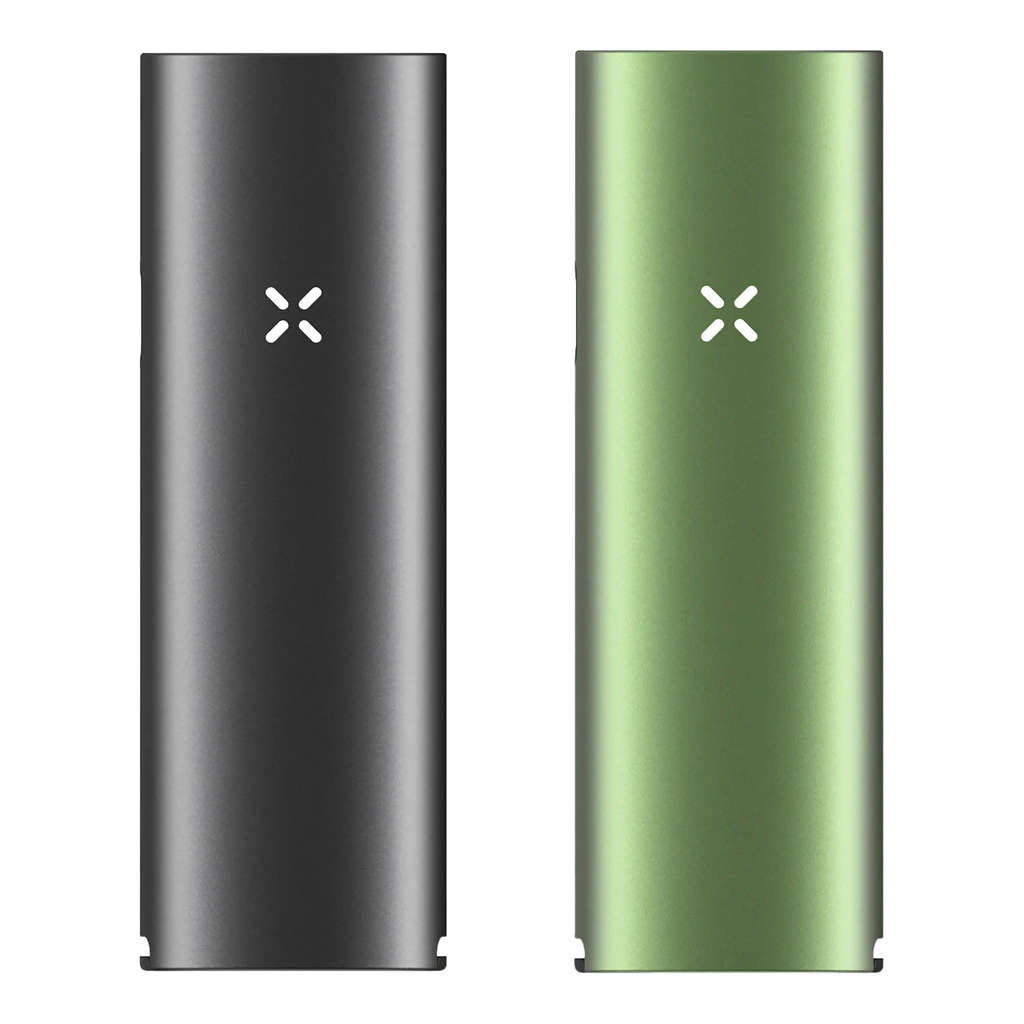
The PAX Four packs a hybrid heater into the smallest body of the three. The oven holds roughly 0.3g, there are four heat modes you step through with the power button, and PAX quotes about 45 to 50 minutes of use on a charge with a full USB-C charge in about 90 minutes. Three oven screens, a flat and a raised mouthpiece, a wire brush and a multi-tool come in the box, and it carries a 2-year warranty.
How to choose
Match the heating type to how you use the device, not the other way round.
- You finish a bowl in one sitting and want it ready fast: a conduction oven or a conduction-leaning hybrid.
- You like to draw slowly, pause, and come back, and you want the last draw to taste like the first: convection, or a convection-heavy hybrid like the Go SRT.
- You want one device that handles both, and you will pay for it: a hybrid like the Venty or the PAX Four.
- You mostly use it at home: a desktop convection unit, since the battery problem disappears.
Whatever you pick, the heating type also sets your cleaning habits. Conduction ovens build residue on the walls; convection and hybrid devices clog at the screens first. Our guide to cleaning a dry herb vaporizer covers both. The full range is in our vaporizer collection, and the product pages for the Venty and the Go SRT carry the complete spec lists quoted here.
Whatever the heating type, the chamber and the cooling path get hot in use. Let the device cool before opening the oven or swapping a capsule, and keep the screens clear; a blocked screen chokes a convection device fastest.
Questions people ask
Is conduction or convection better?
Neither is better outright. Conduction is quicker to heat and easier to draw on but needs a stir and keeps cooking between draws. Convection is more even and pauses when you do but uses more battery. Most current portables are hybrids that try to take the best of each.
Do I need to stir a convection vaporizer?
Rarely. Hot air passes through the whole load, so it heats evenly. A conduction oven heats from the walls inward and needs the load turned once mid-session.
Why does my conduction vaporizer taste roasted at the end of a session?
The herb against the oven walls finishes before the herb in the middle, and the oven keeps heating between draws. Stir once halfway through, use a fine grind, and finish the session rather than letting it sit at temperature.
Is a hybrid vaporizer worth the extra money?
If you want a quick start and an even session from one device, yes. If you only ever take short sessions, a simple conduction oven does the job; if you draw slowly and want flavor to hold, a convection device does it for less than a top hybrid.
Can I use a coarse grind in a convection vaporizer?
Yes. Air has to get through the load, so a coarser grind and a looser pack suit convection. A conduction oven wants the opposite: fine and snug, for more contact with the walls.