In this guide
The short version
- A torch flame is hot and wind-resistant and toasts a cigar fast; a soft flame is gentler, slower and dies in a breeze.
- A straight cut opens the whole cap, a V-cut opens a wedge, a punch opens a small round hole. All three work; they draw differently.
- Hold a torch about an inch below the foot and rotate the cigar. The flame itself should never touch the tobacco.
- Many cigar lighters carry their own punch, so one tool in the pocket can light and cut.
Two decisions cover most of what matters in cigar hardware: what kind of flame you light with, and what kind of opening you cut. Each has a traditional answer (a soft flame and a straight cut) and a modern one (a jet torch and a punch), and the right pick depends more on where and what you smoke than on taste. Here is how they differ, with the specs from the lighters and cutters we stock.
Torch or soft flame
A jet torch mixes butane with air before it burns, so the flame comes out as a narrow blue cone. It is hot, it is focused, and wind barely moves it. A soft flame is the yellow, candle-like flame of a classic lighter: cooler, wider and easily blown out, but far harder to overdo.
What a torch does well
A torch toasts the foot of a cigar in seconds and keeps working on a patio, a boat or a golf course where a soft flame would never stay lit. The trade-off is that it is easy to hold it too close. Torch heat will char the wrapper and leave a burnt taste for the first few draws if the flame touches the tobacco.
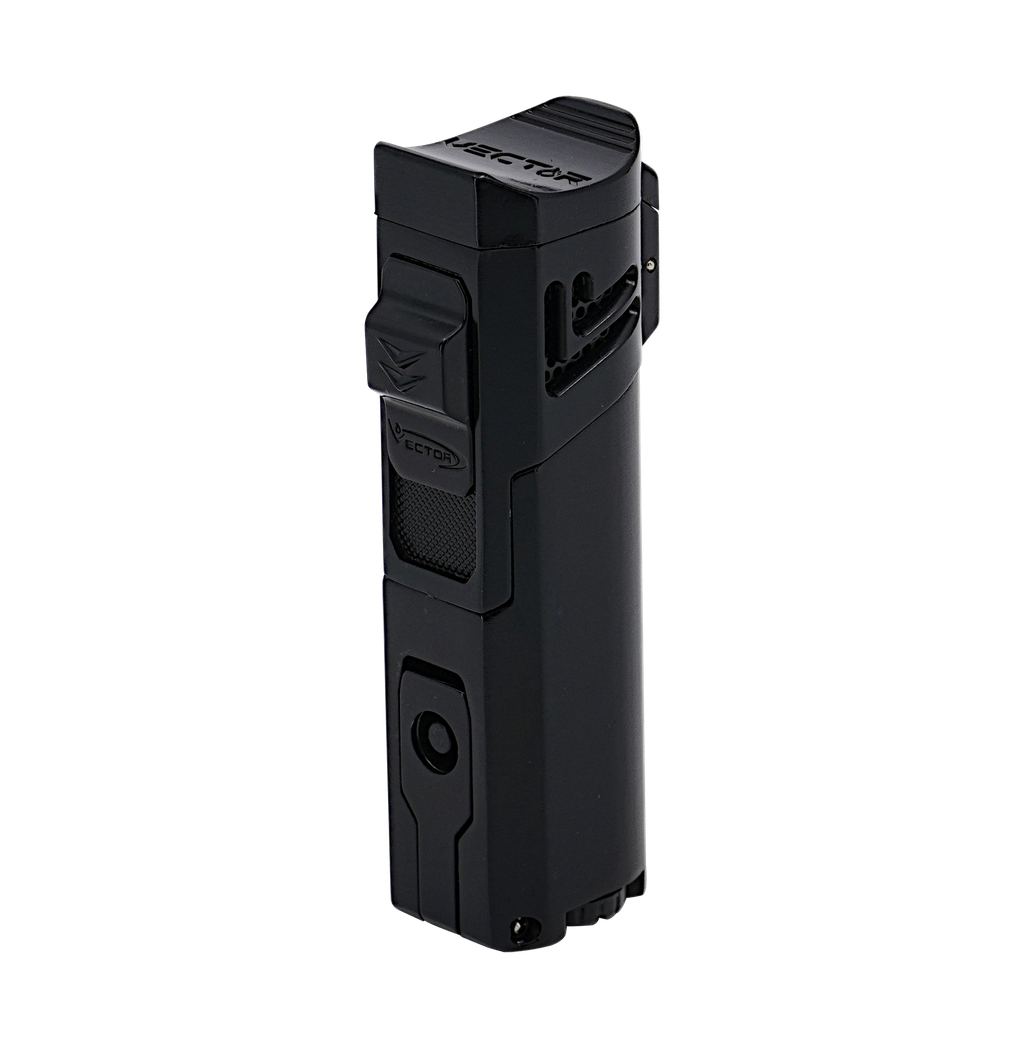
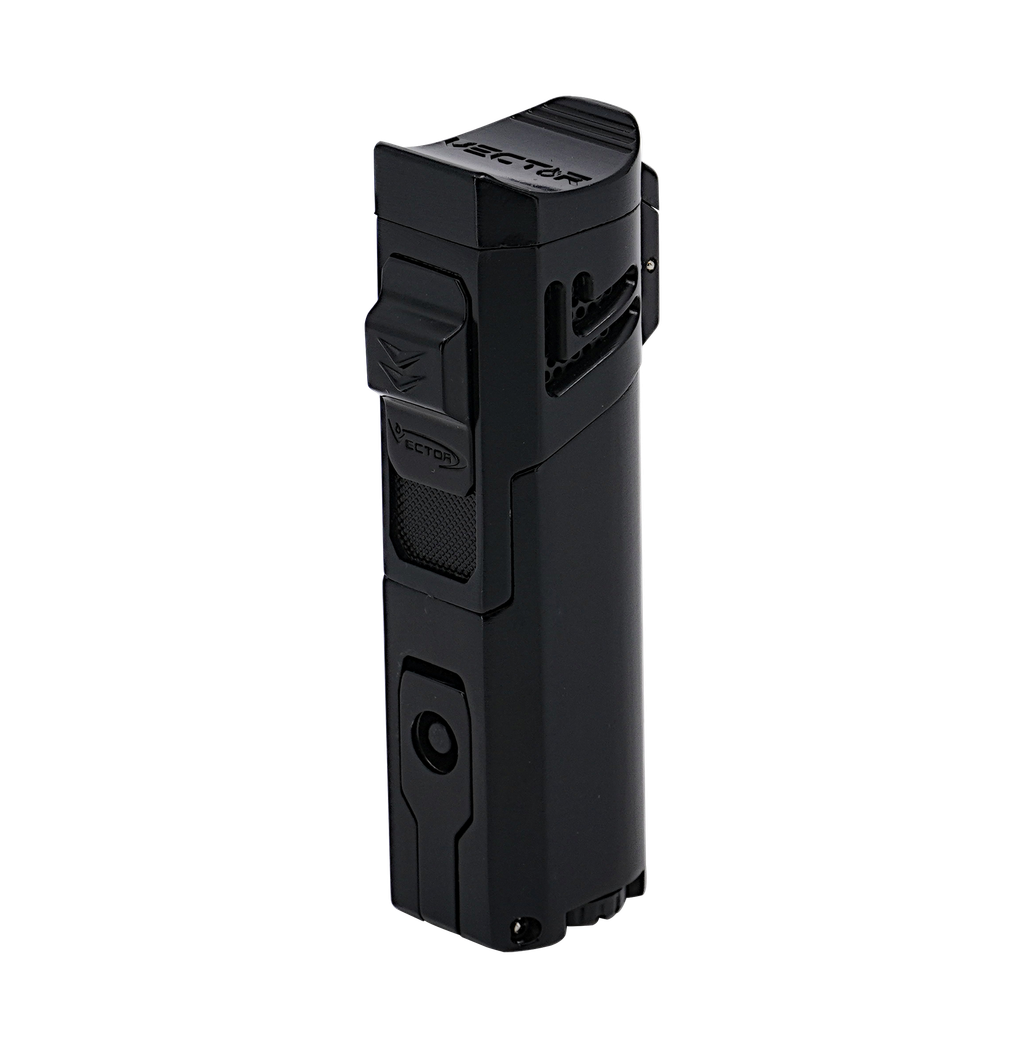
The Vector Caliper is a torch built around cigars. It runs a single large jet, so you can cover a wide foot with one flame instead of three small ones, and the body is 0.92 by 1.06 by 3.5in, which is small for a cigar torch. Its flip-top lid has a concave groove that doubles as a cigar rest, and a fold-out punch lives in the base. Vector rates it to light up to 10,000 feet and backs it with their No Proof Warranty, so no receipt is needed for warranty service.
If you prefer two jets, the Vertigo Nitro pairs twin pinpoint torch flames with a fold-out punch, a large flame adjuster and an all-metal, free-standing body. Our torch lighter guide covers one, two or three jets in general.
What a soft flame does well
A soft flame heats the foot slowly and evenly, which is why many people who smoke indoors still prefer it. You can bring the flame right up to the tobacco without the scorch risk, and the slower toast gives you time to rotate the cigar and watch the glow spread. It fails in wind, and it takes longer per light.
The Vertigo Attache 2 is the plain version of this idea: a traditional soft flame, a fuel level window, a large flame adjuster, a metal housing that stands on its own, and a rating to light up to 12,000 feet. Our soft flame lighters collection has the others.
One lighter with both
The Vector Guardian puts a single jet torch and a soft flame in the same body, each with its own ignition button, so you press one for a quick toast outside and the other for a slow light at the table. The clear gas tank shows the fuel level, which saves the usual guesswork about when to refill.
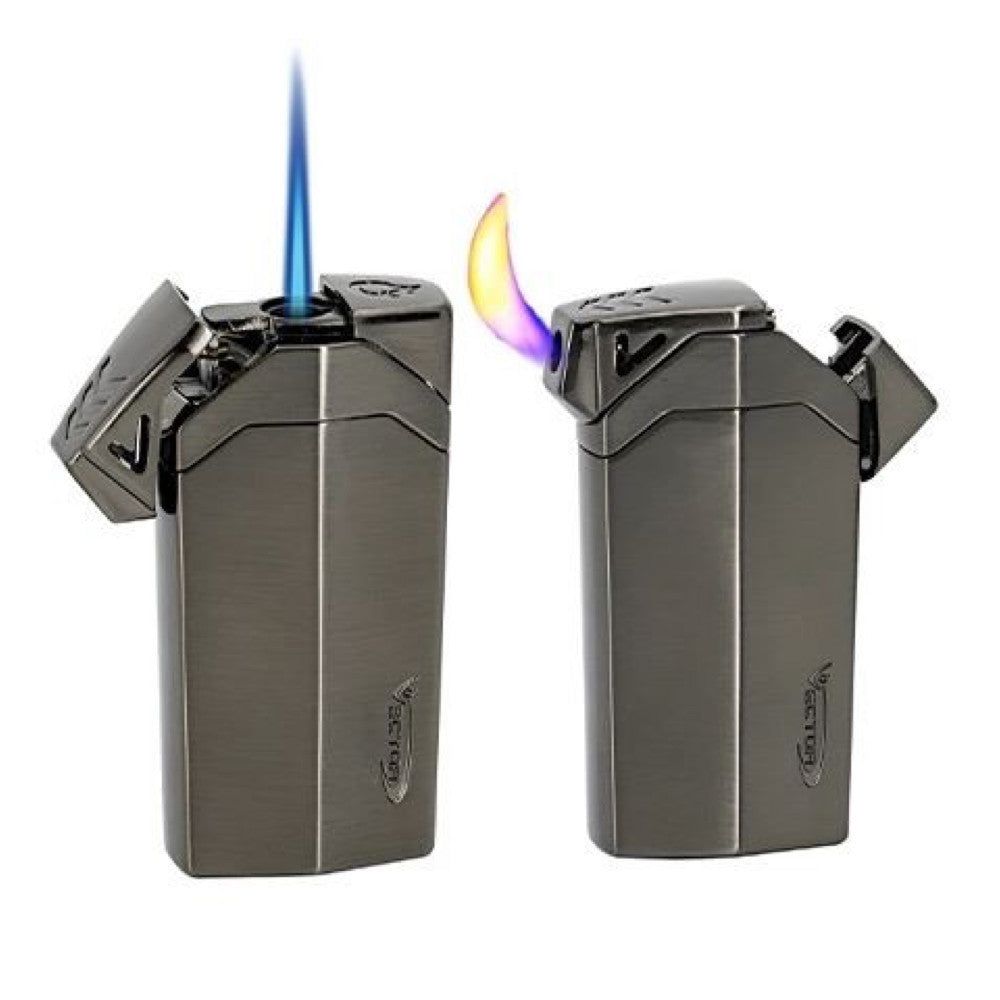
With a torch, keep the tip of the flame about an inch below the foot and rotate the cigar until the whole foot glows, then take your first draw with the flame still at a distance. If you see black flakes or smell burnt paper, the flame was too close.
Punch, straight cut or V-cut
The cap of a cigar is the piece of wrapper leaf glued over the head to hold it together. Every cutting tool removes some of it so you can draw through the cigar. How much it removes, and in what shape, decides how the draw feels.
Straight cut
A straight cut takes the cap off flat with a guillotine blade, usually two blades closing from both sides. It gives the most open draw and works on any shape of cigar. The risk is cutting too deep, past the shoulder where the cap ends, which lets the wrapper unravel.
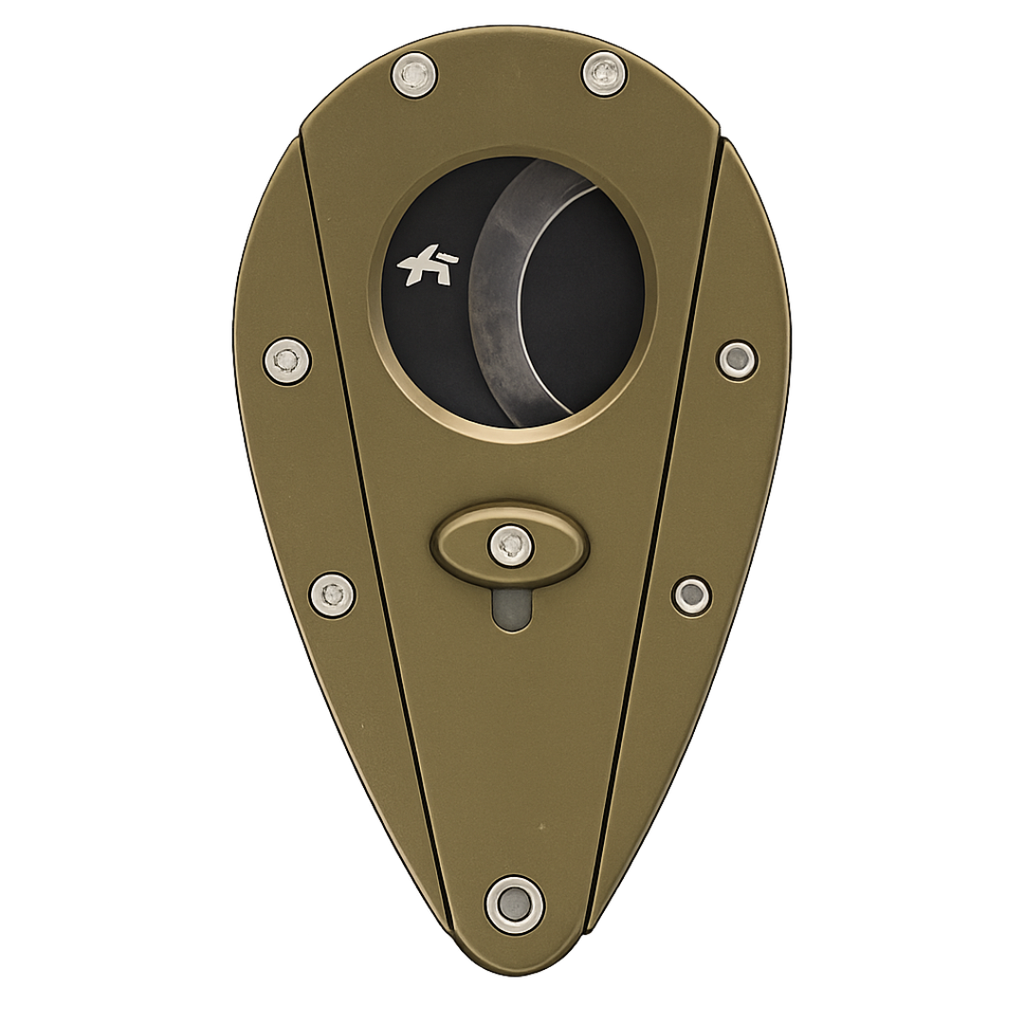
The XIKAR Xi1 is a double guillotine with stainless steel blades in an aluminum body. Its teardrop shape fits the hand, the action is spring-loaded, and it is designed around 54 ring gauge cigars while cutting up to 64 ring gauge depending on how deep you set the cigar. XIKAR covers it with a limited lifetime warranty.
A closed-back cutter is the easy way to avoid overcutting: the Vertigo Shark has serrated twin guillotine blades behind a closed back, so the cap can only go in so far, plus a built-in cigar rest. It also handles up to 64 ring gauge.
V-cut
A V-cutter takes a wedge out of the cap instead of removing it. The opening is narrower than a straight cut but deeper, so the draw sits between a guillotine and a punch, and the cap shoulders stay intact. Many people reach for a V-cut on torpedo and other pointed shapes.
The Lotus Meteor is a dedicated V-cutter: an extra deep stainless steel blade worked with one finger, a spring-loaded lock, a metal body, and a rating up to 64 ring gauge.
Punch
A punch bores a round hole in the center of the cap and leaves everything else alone. The cigar stays as tight as it was made and there is nothing to overcut. The draw is the firmest of the three, and on a very large ring gauge a single small hole can feel too tight.
The Vertigo Torpedo is the no-fuss version: an 8mm blade on a key ring that pushes out, locks in place, and clears its own tobacco plug when you press the red button. It measures 1 by 0.75 by 2.5in in metal and plastic.
One cutter that does all three
The Lotus Omni is the answer for anyone who does not want to choose. It carries an extra deep V-cutter and a guillotine on the same body, both for cigars up to 64 ring gauge, plus two fold-out punches in two different diameters: the smaller one for slender cigars, the larger for 54 to 64 ring gauge. The steel blades sit in a metal housing with a textured grip and a spring-loaded lock, and the whole tool is 3.268 by 2 by 0.669in.
Ring gauge is the cigar's diameter in 64ths of an inch. Every cutter above is rated to 64 ring gauge, which covers almost everything sold today, so the rating only matters if you smoke the very fattest shapes.
Which cut for which cigar
Cut | What it removes | Draw | Where it shines |
|---|---|---|---|
Straight (guillotine) | The whole cap, flat | Most open | Any shape; the default |
V-cut | A wedge through the cap | Medium, focused | Pointed shapes, cigars that draw tight |
Punch | A round hole in the cap | Firmest | Keeping the cigar intact; pocket carry |
If a cigar draws tight after a punch, a straight cut on the same stick will open it up; if a straight cut gives you more smoke than you want, go the other way next time. The cigar cutters collection is sorted by type.
Lighting a cigar step by step
- Cut first, then light. Cutting a lit cigar is messy and the heat can loosen the cap.
- Hold the cigar at a slight angle and bring the flame under the foot without touching it: about an inch away for a torch, closer for a soft flame.
- Rotate the cigar slowly until the entire foot has a thin, even ring of glow. This is toasting, and it takes longer than people expect with a soft flame.
- Draw gently while keeping the flame at the same distance, still rotating.
- Look at the foot. If one side is dark and one is not, touch up the unlit side before you settle in.
Fuel and altitude
Every lighter in this guide runs on butane, and a jet torch is far more sensitive to what is in the can than a soft flame is. Vector's own advice for the Caliper is to use high-purity, multi-refined butane so the burner stays clear; cheap fuel leaves residue that clogs the jet. Butane explained covers how to purge and refill without trapping air.
Altitude is the other variable. Thin air changes how butane burns, and lighters built for it say so: the Caliper is rated to 10,000 feet and the Attache 2 to 12,000 feet. If you smoke in the mountains, that line on the spec sheet matters more than most.
Questions people ask
Is a torch or a soft flame better for cigars?
Outdoors or in any breeze, a torch. Indoors, when you have time, a soft flame is kinder to the wrapper. Plenty of cigar smokers keep one of each, or buy a lighter like the Vector Guardian that has both.
What is the difference between a punch and a cutter?
A cutter removes part of the cap with a blade: the whole cap with a straight guillotine, or a wedge with a V-cut. A punch bores a round hole in the cap and leaves the rest of it in place, so the cigar holds together but the draw is tighter.
What does ring gauge mean on a cutter?
Ring gauge is the cigar's diameter in 64ths of an inch, so a 64 ring gauge cigar is one inch across. A cutter rated up to 64 ring gauge will take almost anything sold today; thinner cigars fit any cutter.
Why does my torch lighter sputter at altitude?
Butane burns differently in thin air, and many torches struggle above a few thousand feet. Some lighters are built for it: the Vector Caliper is rated to 10,000 feet and the Vertigo Attache 2 soft flame to 12,000 feet.